The 2025 Ford F-150 Lightning: Discontinued, and Still One of the Best Electric Trucks You Can Buy
Ford ended production of the F-150 Lightning in December 2025. Andrew Frick, president of Ford Blue and Ford Model e, made the announcement on a call with reporters and put it plainly. The 2025 model year was the last one. There is no 2026. The best selling electric truck in America is gone.
The Lightning wasn’t perfect. It was excellent at the things a truck needs to be excellent at, and it opened the door for a lot of buyers who would never have considered an EV otherwise. I want to spend some time on why it mattered because the way Ford is replacing it says something about where the industry is going.
What The Lightning Did Right From The Start

When Ford launched the Lightning, they made a decision a lot of automakers didn’t. They put the electric powertrain into the truck people already knew and loved. Same aluminum body, same bed, same cabin proportions, same Ford dealer network. From the outside, it looked like the truck your neighbor drives. From the inside, it drove like a truck too, quieter and quicker, but familiar in every way that matters.
That decision paid off. The Lightning became the best selling electric truck in America and stayed there. It won North American Truck of the Year in 2023. It let Ford dealers who had never sold an EV before sell one to the customers already walking onto their lots. That was the thesis, and for a while it worked exactly the way it was supposed to.
The Specs
Two battery options and a lineup that grew from four trims (Pro, XLT, Lariat, Platinum) to five when Ford added the value focused Flash.
- Standard Range: 98 kWh battery, 452 horsepower, EPA range of 240 miles, 76 MPGe city / 61 MPGe highway.
- Extended Range: two configurations. A 123 kWh pack (536 horsepower, 300 miles EPA, used on Flash) and a 131 kWh pack (580 horsepower, 320 miles EPA on Pro and Lariat, 300 miles on Platinum); both make 775 lb-ft of torque.
- Payload: up to 2,329 pounds on the Standard Range Pro (drops on the Extended Range trims).
- Towing: up to 10,000 pounds with the Max Trailer Tow Package.
- 0 to 60 mph: around 4 seconds with the Extended Range battery, roughly 5 seconds with the Standard Range.
For a full size electric truck with a real bed and a real 5.5 foot cargo box, the numbers were strong from day one, and they got stronger with each model year.
The Feature That Made It Stand Out
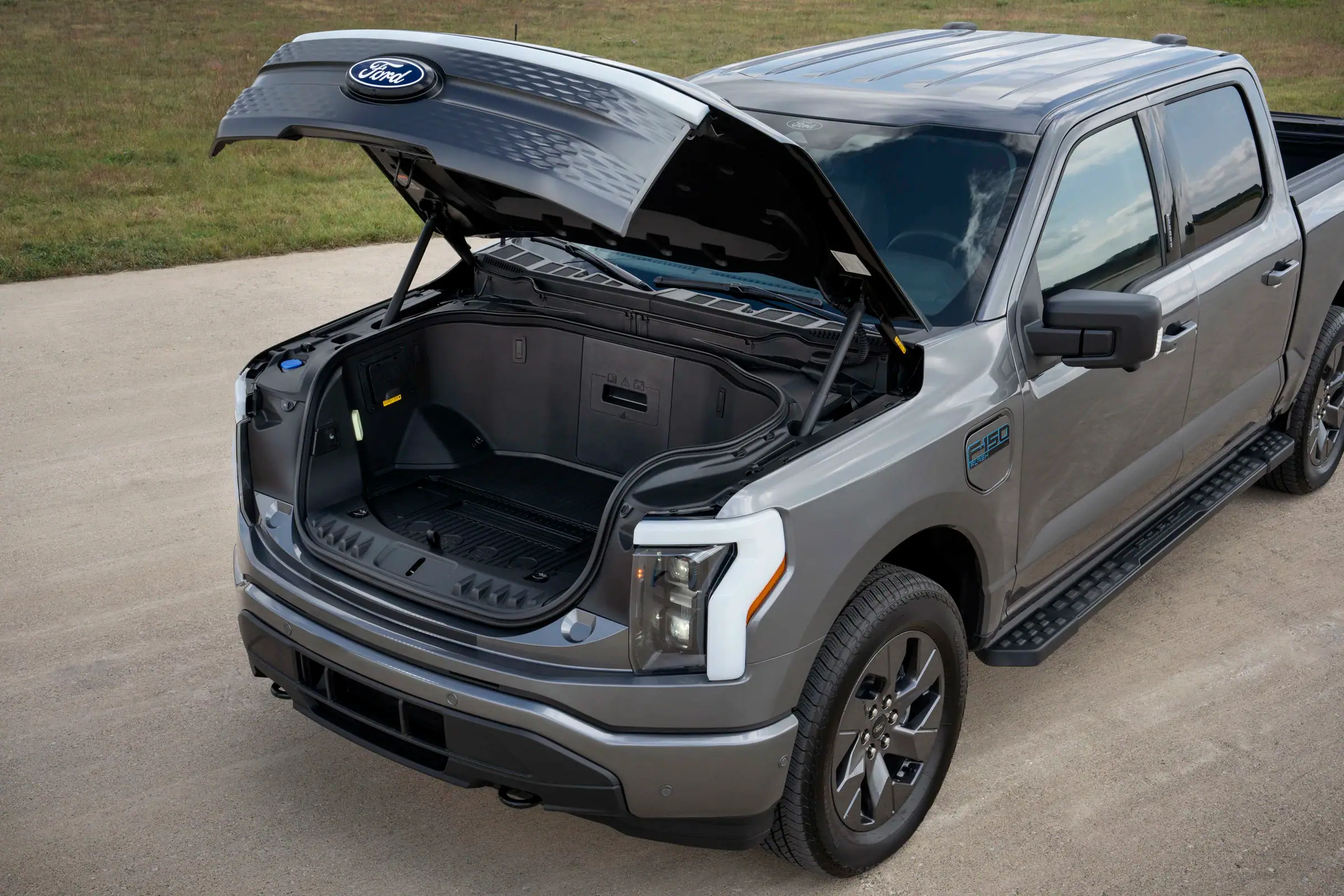
Pro Power Onboard. The Extended Range trucks came with 9.6 kW of onboard AC output through outlets in the bed and frunk. Paired with the Ford Charge Station Pro home charger and the Home Integration System, the truck could power an average home for up to three days on a single charge, or up to ten days with careful use.
That wasn’t a party trick. During the 2022 winter storms, Lightning owners kept their houses running while neighbors sat in the dark. During hurricanes in the Gulf, they ran freezers and medical equipment for days. Ford turned a truck into a whole home backup battery, and while newer electric trucks like the Chevrolet Silverado EV and Tesla Cybertruck now match or beat the Lightning’s raw output, the Lightning got there first and did it in a truck that looked exactly like the one at your local Ford dealership.
Range and Charging Reality
Extended Range Lightnings advertised 320 miles, and real world testing generally landed in the mid to high 200s depending on weather, cargo, and driving style. That’s typical for a truck, electric or otherwise. Tow a heavy trailer and range drops sharply, sometimes by half, which is the same story for every electric truck currently on sale.
Charging peaked at around 155 kW on the Extended Range battery, which meant a 15 to 80 percent DC fast charge in about 40 minutes on the right charger. Not the fastest in the segment, since newer 800 volt trucks charge quicker, but perfectly usable for road trips.
Home charging on retail Lightnings pulled 48 amps through an 11.3 kW onboard charger, adding roughly 20 miles of range per hour (fleet-only 19.2 kW/80 A configurations could reach about 30 miles per hour), which meant an overnight top off was easy even on the biggest battery.
Inside The Cabin
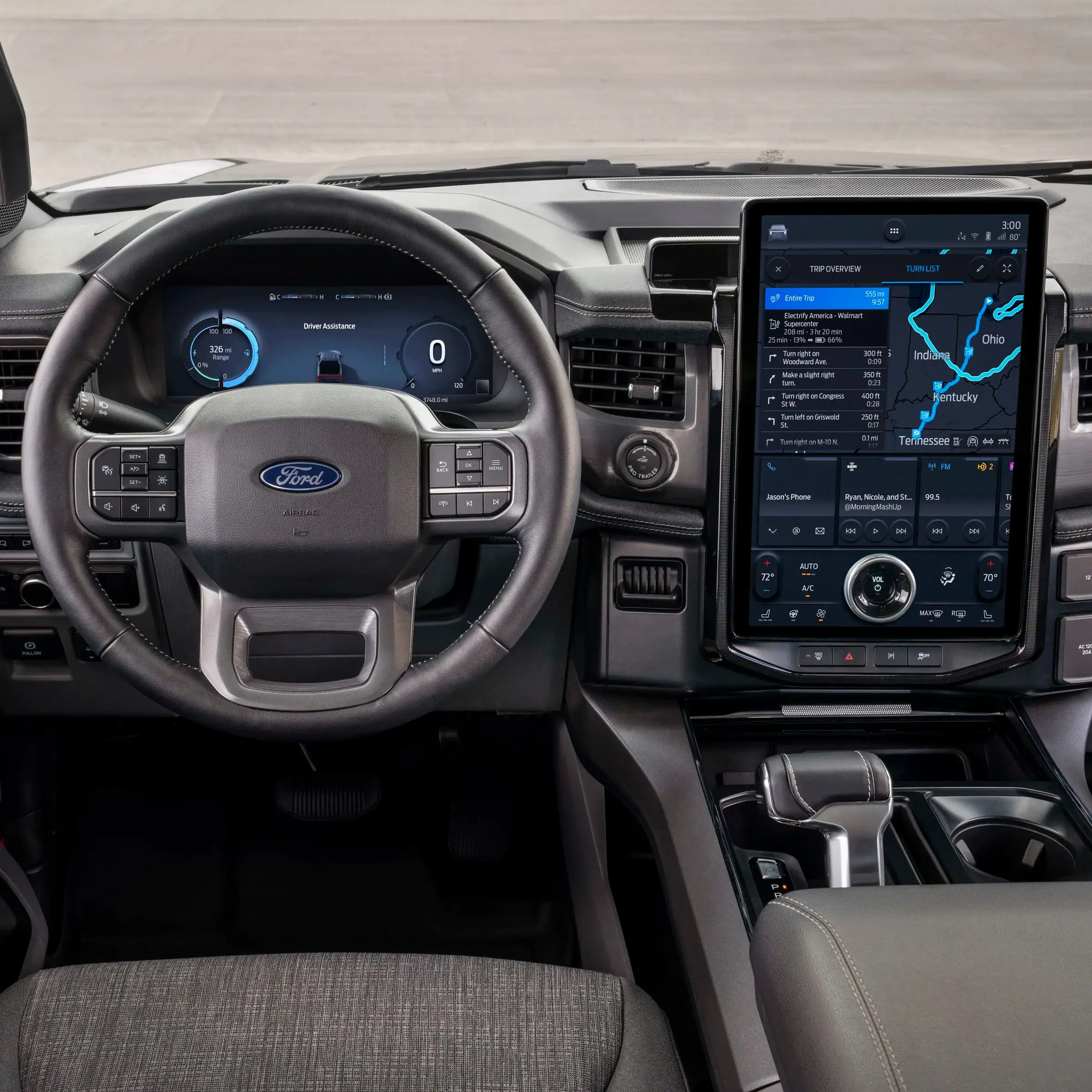
Ford didn’t reinvent the F-150 interior for the electric version. That’s a compliment. The cabin is familiar to any F-150 owner, with a big center screen (15.5 inches on Lariat and Platinum, 12 inches on Pro and XLT), physical climate controls where you want them, and an useful set of storage nooks. On higher trims the Interior Work Surface folds out from the console into a flat table big enough for a laptop, and the front seats fold nearly flat if you need to sleep in the cab.

The rear seat is roomy enough for adults on long trips, with the usual F-150 SuperCrew proportions. The 60/40 split rear bench seat flips up to reveal under-seat storage. None of this feels like an EV compromise. It feels like an F-150 that happens to be electric, which was always the point.
Why Ford Killed It
Two things happened. The first is that sales never reached the 150,000 units per year Ford originally targeted. The company initially planned for up to 150,000 Lightnings per year. Actual production never crossed 40,000. That’s the “market realities” line Frick used on the call, and it’s the truthful version.
The second was the September 16, 2025 fire at Novelis’s Oswego, New York aluminum plant that took down the F-150 line’s aluminum supply. Ford paused production and, months later, decided not to resume Lightning production at all.
The replacement plan is an extended range electric vehicle (EREV) version of the F-150 with a gasoline range extender, arriving on an unspecified future date. Ford also has a $30,000 midsize electric pickup truck coming in 2027 on their Universal EV platform, to be built at the Louisville Assembly Plant. Neither replaces what the Lightning did in the meantime.
Where This Leaves Buyers
The 2025 Lightning has effectively sold out at dealers. Some may still have limited inventory, but the tap has closed. That leaves two paths.
If you can find a new 2025 Lightning at a dealer with the trim and battery you want, buy it. Any leftover 2025 will still carry the full new vehicle warranty, and dealer discounts on remaining stock have been significant. It’s likely the best deal on a full size electric truck you’ll see this decade.
If you’re shopping used, this is where the story gets interesting. The Lightning was built to Ford’s normal quality standards, the battery warranty is 8 years or 100,000 miles under Ford’s terms, and the aftermarket for parts and service will exist for years. Used Lightning prices have already started dropping and will likely drop further as the discontinuation news settles. Get one with the Extended Range battery if you can, verify battery health before signing, and check our used EV buying guide for what to ask a dealer or private seller.
The Bigger Picture
The Lightning wasn’t a failed product. It won its segment. It delivered an useful feature (Pro Power Onboard) that helped families through blackouts. It proved a mainstream brand could put an EV into a familiar body and sell it. What killed it was the gap between what Ford projected (150,000 per year) and what the market absorbed (about a quarter of that), combined with a supply chain disruption Ford chose not to work around.
That’s a strategic decision, not a verdict on the product. It’s worth being clear eyed about the difference. The Lightning was one of the best electric trucks money could buy, and it still is if you find one on a lot.
Where I Land
The F-150 Lightning is a good truck that got caught between two competing realities. Ford’s ambition was mass market volume from F-150 buyers, and the market wanted something different, whether that meant cheaper, hybrid, or purpose built like the Rivian R1T. The Lightning fell between those chairs, but not because it was a bad truck.
If I were shopping for an electric truck right now, the Lightning would still be on my short list, especially in the Extended Range Lariat trim. The combination of familiar F-150 utility, 320 mile range, 580 horsepower, and Pro Power Onboard is a package that stands up to what’s still on sale today. Ford may be walking away from it, but that doesn’t change what it is.
The Lightning is discontinued. It isn’t obsolete.
EV Rob writes about electric vehicles, automotive technology, and the future of transportation at The Wonderful World of EVs.
Frequently Asked Questions
When did Ford discontinue the F-150 Lightning?
Ford ended production of the 2025 model in December 2025. There is no 2026 model. The announcement was made by Andrew Frick, president of Ford Blue and Ford Model e, on a call with reporters on December 15, 2025.
Why did Ford discontinue the Lightning?
Two reasons. Sales never reached the 150,000 units per year Ford originally planned for. Actual peak production was around 40,000 per year. And the September 16, 2025 fire at Novelis’s Oswego, New York plant disrupted production. Ford decided not to resume.
What’s replacing the F-150 Lightning?
Ford is planning an extended range electric vehicle (EREV) version of the F-150 with a gasoline range extender, with no firm launch date announced. Separately, Ford has a $30,000 midsize electric pickup truck on their Universal EV platform planned for 2027 (Louisville Assembly Plant).
Can I still buy a new F-150 Lightning?
Some dealers may still have leftover 2025 model inventory. Once that sells through, no new Lightnings will be built.
Is the Lightning warranty still valid?
Yes. The battery warranty is 8 years or 100,000 miles under Ford’s terms, and the general new vehicle warranty still applies. Ford’s dealer network will continue to service the vehicle.
What’s the range of the F-150 Lightning?
The Extended Range battery is EPA rated at 320 miles. The Standard Range battery is rated at 240 miles. Real world range depends on load, weather, and driving conditions.
For Ford’s other electric play, see our review of the 2026 Mustang Mach-E.


