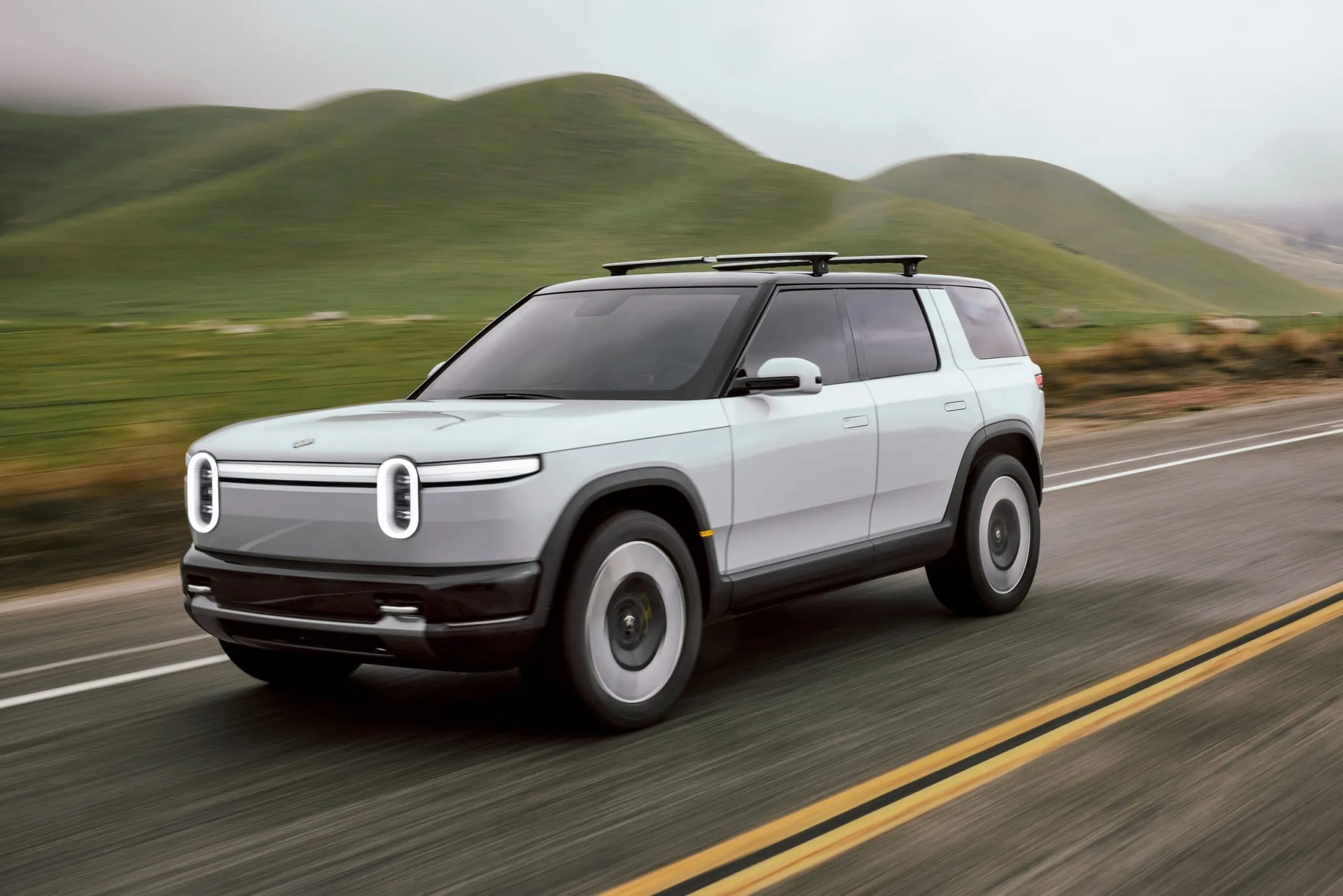
Rivian R2 vs. Tesla Model Y: Same Price, Opposite Personalities


The Rivian R2 Performance and the Tesla Model Y Performance carry the exact same $57,990 sticker, and once each company adds its destination and order fees, the out the door totals stay within a rounding error of each other. So the money can’t settle this one. The cars have to speak for themselves.
And these two have very different things to say. The Model Y has spent years as the best selling individual EV model in the world by being smooth, efficient, and easy to live with. The R2 just arrived with mud in mind and a chip on its shoulder, and Rivian knew exactly what it was doing.
I’ve driven both, and spent weeks reading every credible review, test, and spec sheet on top of that. Here’s what I found, what surprised me, and which one I’d put in my own driveway. Spoiler on that last part, my answer isn’t either of the trims in the headline.
The Full Price Picture
The price tie only holds at the top. Walk down the price ladder and the two brands stop looking anything alike.
Tesla sells a full family of Model Ys today. The Standard RWD opens at $39,990. The Premium RWD, which I’d argue is the best car Tesla makes for the money, runs $45,990 and carries 357 miles of range, the longest of any Model Y. The Premium AWD and Performance fill out the ladder from there. Whatever price you’re aiming for in this segment, Tesla has a Model Y for it.
Rivian sells one R2. The Performance with Launch Package. That’s the entire menu right now. The Premium arrives late this year at $53,990, and the $44,990 Standard model Rivian has promoted since 2024 arrives in 2027. It’s a real car with a real price. It’s just not a car you can have yet, and a price you can’t pay isn’t a price. It’s a preview.

What They’re Like to Drive
The refreshed Model Y, the one Tesla fans call Juniper, is the most complete car Tesla has ever shipped. The company wrapped the cabin in acoustic glass, swapped roughly 70 welded rear panels for one giant casting, and softened the suspension’s rough edges. Tesla’s own testing claims road noise fell 22% and rough road vibration fell 51%, and the difference is obvious in the first mile. The old Model Y was quick and clever and a little unfinished. This one feels done.
The R2 comes at driving from the opposite direction. It sits tall, steers with actual feel, and stays settled when the pavement gets bad, because it was engineered by people who assume the pavement will eventually end. One outlet called it “the Model Y’s first real threat,” and another reviewer who flew to California to test it rated the interior quality as excellent and called the rotary dials on the steering wheel “a brilliant solution” once you’ve learned them. There’s a short learning curve before the dials feel natural — the cabin temperature dial in particular is easy to bump on your first drive.
My read after driving both? The Model Y is the car you stop noticing, and I mean that as praise. It makes commuting feel like nothing. The R2 is the car you keep noticing, and I mean that as praise too. One is a tool that disappears into your routine. The other is a standing invitation to break it.
Range: What the Sticker Says vs. What the Road Says
On paper, these two are identical. Both Performance trims carry EPA ratings of 105 MPGe combined. Rivian CEO RJ Scaringe pointed this out at launch, and he earned the brag. The R2 weighs roughly 800 pounds more than the Model Y and isn’t exactly built for slicing through the wind. Matching Tesla on the government efficiency test with that much extra weight is impressive engineering.
But the sticker isn’t the whole story. In back-to-back real-world testing by Out of Spec Reviews, the R2 used 18% to 26% more energy than the Model Y at every speed measured. That efficiency gap shows up in real range and in monthly charging cost.
So what does that mean for you? The R2’s EPA range of 330 miles is higher than the Model Y Performance’s 306, so on paper the Rivian goes farther on a full charge. But in real world highway driving, the Model Y uses less energy per mile, which means it stretches each charge further in practice. Around town, you won’t notice the difference. On longer trips, the Model Y is likely to require less time at the plug, though the exact stop-count difference depends on the route, charging speeds, and starting battery level.
Charging
Both cars ship with native NACS ports, which means both pull up to a Tesla Supercharger and plug in like they belong there. If you’ve followed EVs for a while, you understand how strange and wonderful that sentence is. Supercharger access was Tesla’s ace for a decade. Now it’s table stakes.
Speed is nearly a wash. The Model Y refills from 10 to 80% in roughly 27 minutes, the R2 in about 29. Both trail the 800 volt Hyundai and Kia systems at peak. But the truth about a two minute charging difference is that it’s shorter than the line for coffee, and I’ve never met anyone who picked their car based on the coffee line.
Cargo, Towing, and the Business of Hauling Things
Fold everything flat and the R2 opens up 90.1 cubic feet of enclosed storage against the Model Y’s roughly 74 to 76, depending on whose tape measure you believe. That’s the tall, square kind of space, the kind you appreciate on moving day rather than in a brochure. The funny wrinkle is that behind the second row, the Model Y wins by about 1.5 cubic feet, so on an ordinary Tuesday the two are dead even. The R2’s advantage only shows up when your life does.
Towing is where the gap gets real. The R2 pulls up to 4,400 pounds with its tow package. The Model Y tops out at 3,500. If there’s a boat, a camper, or an utility trailer anywhere in your plans, that’s 900 pounds of deciding factor.
And a note for bigger families. Tesla launched the Model Y L in the U.S. in July 2026, a stretched version with six seats and 89 cubic feet of cargo, starting at $61,990. The R2 seats five, full stop. If you need a third row, Tesla is the only one of these two returning your calls.
Where the Pavement Ends
The R2 carries 9.6 inches of ground clearance, a 25 degree approach angle, a 26 degree departure angle, and drive modes named Rally and Soft Sand. Top Gear placed its capability alongside the Ford Bronco Sport Sasquatch and the Subaru Outback, which is exactly the company a vehicle like this wants to keep.
The Model Y carries about 6.0 to 6.6 inches of clearance and no off road modes at all, which tells you Tesla’s engineers spent their energy where their customers drive. Gravel driveway, dirt lot at the trailhead, no problem. Anything rougher and you may be volunteering the underside of your car for science.
If your world is paved, this section changes nothing. If it isn’t, this section is the whole article.
Two Very Different Rooms
Tesla’s Juniper cabin is minimalism done properly. Ventilated seats, ambient lighting, an 8 inch screen for the back row, and a level of quiet no previous Model Y came close to. Tesla kept the conventional turn signal stalk in the Model Y, an about-face from the stalkless Model 3 Highland. It’s a serene, uncluttered place that asks nothing of you.
The R2’s cabin asks you to look around. There’s real birch wood running across the dash, materials that feel selected by a person rather than a purchasing department, and a bright 15.6 inch center screen. Reviewers have also pointed out that the R2 has something Tesla still won’t install, a digital driver’s display that puts your speed directly in front of you. In the Model Y, your speed lives on the center screen and your eyes learn the detour. In the R2, the information lives where you’re already looking.
Software flips the score. Tesla’s infotainment is the fastest and deepest in the business, and a decade of over the air updates has built real trust that the car improves after you buy it. Rivian’s system is clean and capable but younger. So here’s how I’d put it. The R2 is the room you’d rather sit in. The Model Y is the computer you’d rather use. Only you know which one matters more to your daily life.
The Assistance Question
Tesla includes Traffic Aware Cruise Control as standard on every car and sells FSD (Supervised) as a $99 per month subscription. Autosteer, which used to be included in the standard package, now requires the FSD subscription. Tesla ended the option to buy FSD as an one time purchase in February 2026, so subscription is now the only way in. It’s the more ambitious system by far, tackling city streets and intersections, and this year’s v14 updates have made it noticeably better. Rivian’s Autonomy+ costs $2,500 for lifetime access or $49.99 monthly and comes with a 60 day trial on new deliveries. Today it delivers Highway Assist, adaptive cruise, Co-steer, and lane keep — capable driver-assist, but hands-on. Rivian has published a roadmap that lists Universal Hands-Free, Auto Parking, and On-Ramp to Off-Ramp as coming in 2026, with point-to-point self-driving in a limited rollout later in 2026 and wider release in 2027.
Neither car fully drives itself, and both require the driver’s full supervision at all times. That said, Tesla’s system is remarkable. It now handles point to point driving on both city streets and highways, navigating turns, intersections, and traffic with increasing confidence. Rivian has signaled that similar capabilities are on the roadmap for Autonomy+ through future software updates, but today the system is focused on highway driving.
What About Five Years From Now
The Model Y holds its value well by EV standards, though the exact retention number varies by dataset, and Tesla sometimes cuts new car prices overnight, which drags used values along for the ride. The R2 has no track record at all yet, because it’s been on sale for a season. Demand looks strong and the reservation list runs deep, but predicting a brand new vehicle’s resale curve is astrology with spreadsheets. I’ll tell you in two years.
The Driveway Verdict
Here’s where I stop refereeing and start answering.
If I were writing the check today, I wouldn’t buy either $58,000 flagship. I’d buy the Model Y Premium RWD at $45,990. Longest range in the lineup at 357 miles, every feature I’d use, and about $12,000 saved versus the Performance, whose main gift is a launch you’ll demonstrate twice and then never again. Take the savings, drive to a national park, and wave at the R2s on the dirt road you’re not taking.
But if my weekends had a trailer hitch or a trailhead in them, I’d wait for the R2 Premium at $53,990 late this year. Same character as the Launch Edition, same beautiful cabin, dual motor grip, without the early adopter premium.
The Model Y is the correct answer. The R2 is the memorable one. Some people need their car to be a solved problem, and some people need it to be a reason to leave the house early. Both of these are excellent vehicles, so the price was never going to decide this for you. It comes down to which kind of person is holding the keys, and that’s a question I can’t answer for you.
Also see: Tesla Model Y vs Hyundai Ioniq 5.


